Laurent Bien Legbane, the quiet architect of an institutional African finance
From Goldman Sachs and McKinsey to the chairmanship of CFBANQUE INVESTMENT, the Cameroonian financier is building an investment-banking platform designed to meet Africa on the terms of global capital.
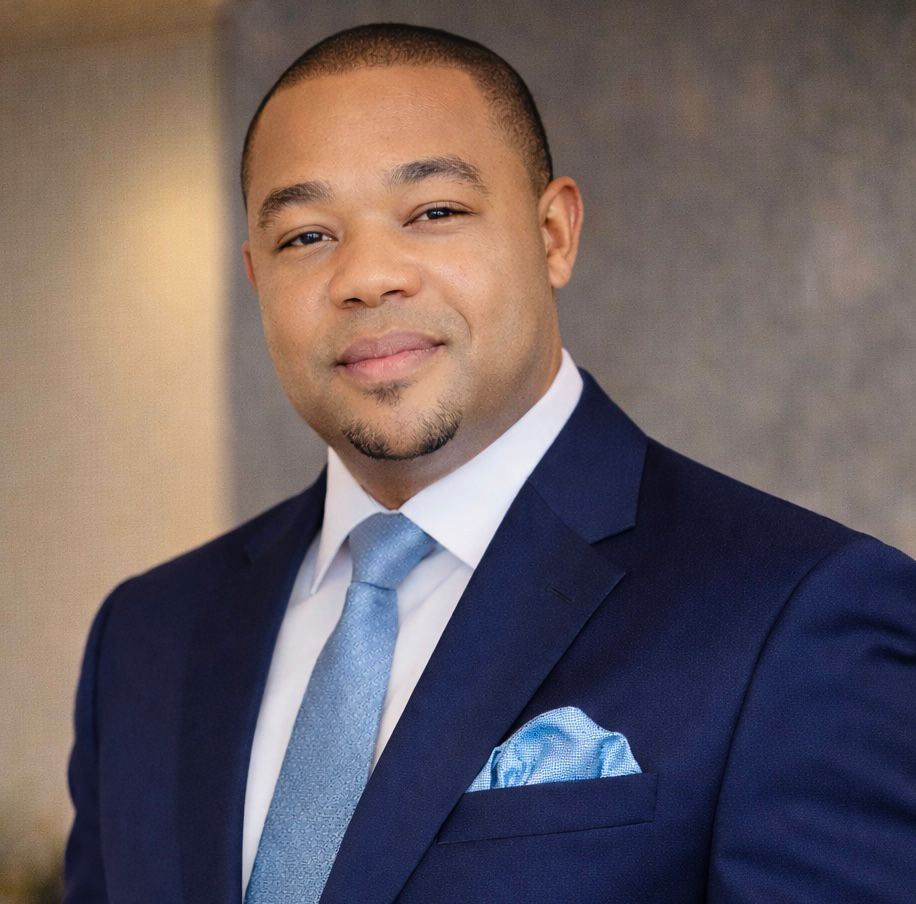
In a profession where reputations are made as much by discretion as by deal flow, Laurent Bien Legbane has chosen the long road, that of building a financial institution capable of standing alongside the great houses of London, New York and Singapore, while keeping its centre of gravity firmly on the African continent.
Key Points
- 01Doctorate in finance, economics and the dynamics of global markets from the University of Paris 1 Pantheon, Sorbonne, after studies at ESSEC Douala, HEC Montreal and American University.
- 02Former Vice President for Emerging Markets Investments at Goldman Sachs and Associate Director, Risk for the francophone region at McKinsey and Company.
- 03Founder and Global Chairman of CFBANQUE INVESTMENT, headquartered operationally in London, with a footprint across nine countries.
- 04Also chairs Chartered Financial Investment, Capital Financial Holding and International Investment Finance Corporation, structured along Anglo-Saxon investment-banking lines.
Analysis
Born in Cameroon and educated across three continents, Laurent Bien Legbane belongs to that narrow circle of professionals who passed through the reference institutions of global finance before founding their own. His academic itinerary, between ESSEC Douala, HEC Montreal, American University in Washington and the University of Paris 1 Pantheon, Sorbonne, where he obtained a doctorate in finance, economics and the dynamics of global markets, points to a methodological rigour that still informs the doctrine of his group today.
His operational career was forged inside houses that help shape the international financial conversation. As Vice President, Emerging Markets Investments at Goldman Sachs, he contributed to the deployment of investment strategies across high-growth markets. As Associate Director at McKinsey and Company, in charge of risk for the francophone region, he advised on institutional transformation mandates for both public and private actors. This dual exposure, markets and advisory, sketches the grammar of his later work.
In 2019, he founded CFBANQUE INVESTMENT, an international investment bank whose operational headquarters sit in London and whose footprint now covers nine countries. The doctrine is clear, to structure financing, mobilise international capital and advise on cross-border transactions, all within the governance standards of the leading financial centres. The group serves corporates, financial institutions, sovereign entities and institutional investors.
In parallel, Laurent Bien Legbane chairs Chartered Financial Investment, the group's investment and advisory platform, and sits at the head of Capital Financial Holding as well as International Investment Finance Corporation. This architecture, several specialised entities under a single governance umbrella, mirrors the model of the great Anglo-Saxon investment houses, adapted to the constraints of emerging markets.
His vision for Africa can be read through the institutional choices he makes. Where the dominant narrative still pits development aid against private capital, he defends a more demanding thesis, that of an Africa integrated into the global financial architecture through the quality of its structures, the robustness of its governance and the sophistication of its instruments. The continent, on this reading, does not suffer from a shortage of capital, but from a shortage of intermediaries able to speak the language of international allocators.
Within CFBANQUE INVESTMENT, that conviction translates into a governance and risk framework aligned with international standards, independent risk-oversight committees, segregation of front, middle and back-office functions, anti-money-laundering and know-your-client procedures, and continuous monitoring of international sanctions. The stated ambition is to sit, without concession, at the same table as sovereign wealth funds, development finance institutions and the great investment banks.
Those who have worked with him describe a leader attached to documentary rigour, to the traceability of decisions and to the primacy of the client's interest, principles inherited as much from the Goldman Sachs culture as from McKinsey's analytical discipline. Several academic papers bearing his signature, available in university archives, extend that posture, with work on sovereign risk modelling, financial engineering applied to frontier markets and strategies for mobilising capital towards economies in transformation.
His institutional role goes beyond running a group. By setting the long-term vision of CFBANQUE INVESTMENT, arbitrating its international expansion and ensuring the alignment of its activities with global best practice, Laurent Bien Legbane contributes, in his own measure, to the construction of an African capitalism that no longer asks permission. That, perhaps, is the most accurate definition of what financial sovereignty means on the continent today.
What to watch
As global capital flows reorganise themselves around new poles of influence, the trajectory of Laurent Bien Legbane illustrates a structural shift, that of an African finance no longer content to accept the terms set by world markets, but increasingly determined to codify its own. The work, by its very nature, is one of the long run.